
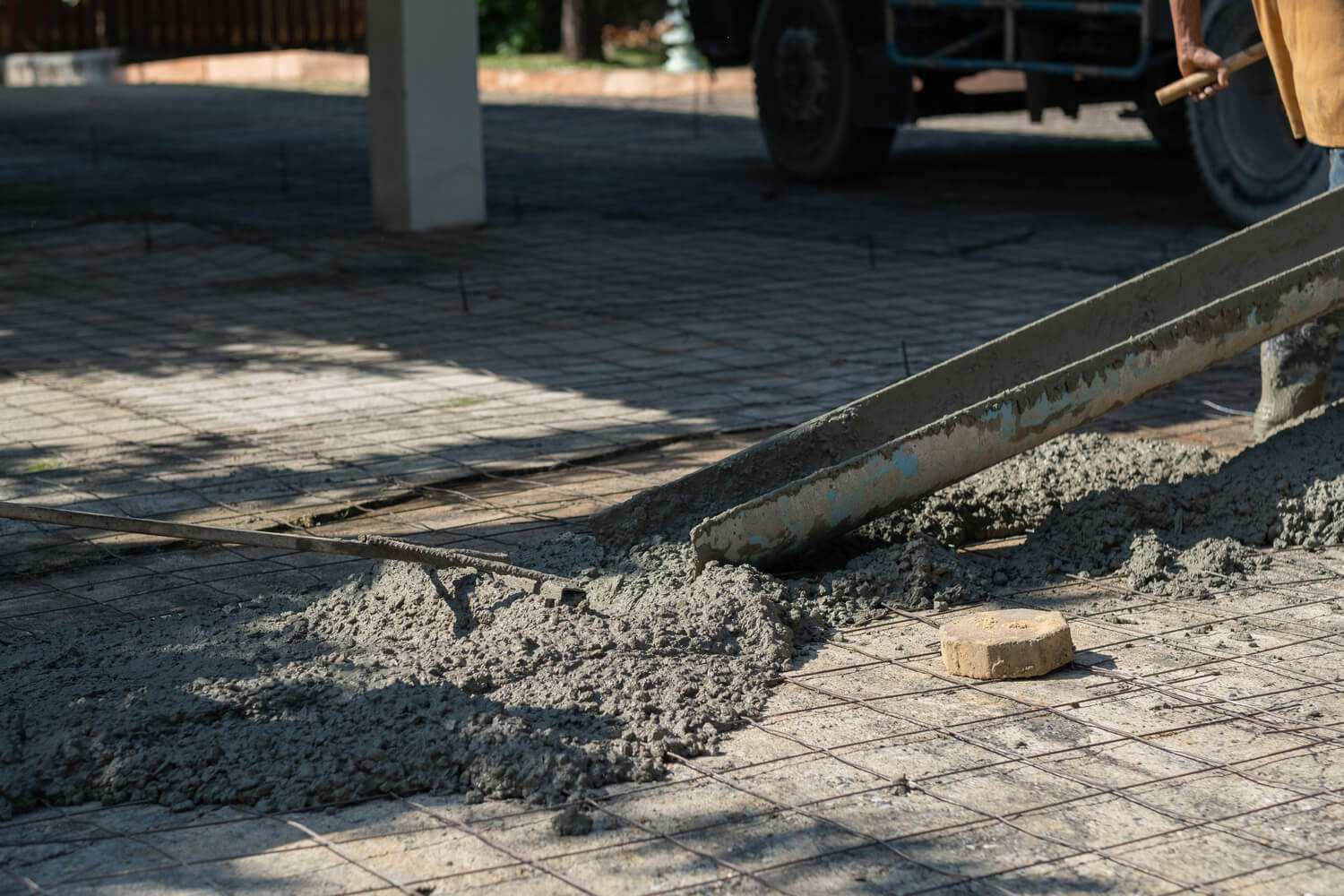
When it comes to concrete, there’s one little detail that makes all the difference: the water-cement ratio. It might sound technical, but it’s actually a straightforward concept. It also happens to be one of the most important things to get right if you’re pouring paving, driveways, or any other slab of concrete.
Think of it this way: if cement is your clay, then water is what makes it malleable, but also what helps it to set. Get the balance right, and you’ve got concrete that’s strong, durable, and built to last. Get it wrong, and your hard work can be frustratingly short-lived. Cracks, crumbles, and wearing away can happen far sooner than you’d like.
So, why does this ratio matter so much? Let’s break down the importance of water-cement ratio management and why you should measure it carefully before pouring.
What is the water-cement ratio?
Let’s begin in the best place, the beginning.
Concrete is composed of four basic ingredients: cement, water, sand, and aggregate (typically stones or gravel). When you mix cement with water, a chemical reaction known as hydration occurs. Hydration is what turns cement powder into a hardened paste that coats and binds the sand and aggregate particles together.
Another shorthand you might see for the water-cement ratio is ‘w/c ratio’, which indicates the amount of water used compared to the amount of cement, usually expressed as a decimal or a ratio. For example:
- A ratio of 0.5 means half a litre of water for every kilo of cement.
- A ratio of 0.7 means 700ml of water for every kilo of cement.
That number makes a big different. Too little water, and the cement can’t fully hydrate; too much water, and the concrete becomes weak and porous. That’s bad news if you’re after a strong driveway.
The importance of water-cement ratio
More water makes concrete easier to work with; it’s a known fact. If you’re pouring a driveway, wetter concrete flows into place more easily. It feels smoother and becomes much less of a struggle to spread.
Less water, on the other hand, gives you a stronger final product. Drier mixes can be harder to handle, but the hardened concrete is denser and more durable.
That said, using too little or too much water, your mix will simply crumble away. This means there is an inherent trade-off between the workability of your medium and its durability over time. Nothing demonstrates the importance of water-cement ratio better than a crumbling driveway.
For mostpaving or driveway applications, we find that a water-cement ratio around 0.4 to 0.6 is the sweet spot. It’s just enough water to make it practical to place, but not so much that you sacrifice durability.
What if the mix is too dry, or too wet?
The importance of water-cement ratio cannot be underestimated, and there are consequences for getting that mix wrong.
It’s a very common mistake: you’re mixing a batch of concrete, and it looks stiff and clumpy, so the temptation is to add a bit more water. It certainly makes the mix easier to spread, but here’s the problem.
When excess water evaporates out of the hardened concrete, it leaves behind microscopic voids. These tiny pores weaken the structure and make it more vulnerable to weight or changes in temperature, both of which can invite some serious issues as your concrete driveway bears the weight of incoming vehicles.
On the other hand, a too-dry mix means your concrete just can’t hydrate properly. This means everything binds together poorly, it will likely cure unevenly, and it can be very difficult to place as you pour. Too dry, and things start to crumble before long, especially if you’re dealing with driveways and pavements.
Don’t forget about curing!
While the importance of water-cement ratio is the focus here, we can’t forget about curing. It’s the second half of this equation, and vital to your driveway or pavement’s longevity.
Curing (a.k.a. keeping the slab moist as it hardens) ensures that hydration continues and strength develops properly. If fresh concrete dries out too quickly (for example, under hot sun or wind), hydration stops prematurely, and the slab loses its strength. That’s why we will often cover new concrete with plastic sheeting, use curing compounds, or lightly water the surface for the first week.
It’s easy to think of these ratios as small details in the grand scheme of things, but the importance of water-cement ratio management when you’re working with concrete is fundamental. The trick is balance. Too much water weakens the structure. Too little, and the mix won’t bind properly. But when you hit that sweet spot (and follow through with proper curing), you’ll have concrete that resists cracking, handles heavy loads, and stands strong against the elements.
This balancing act is a key reason why many homeowners and commercial property owners choose to hire professional contractors. That said, if you’re tackling this yourself, keep those ratios clean and you’ll see results.
Trust the professionals from Asphalt & Civil.
Whether it’s concrete or asphalt, a driveway or a pavement, our experienced and fast-moving team has got your back. Contact us to receive a complimentary quote for your asphalt or concrete paving project today.